Measured condition data on the infrastructure that is hardest to reach.
Altitude Inspections flies contact inspection drones on elevated water tanks, above-ground steel and HDPE pipe, and wind turbines. No scaffolding. No rope crews. You get real numbers so repairs get planned years ahead instead of after a failure.
What we do
Inspection data you can plan around, for the assets that are hardest to reach.
We get instruments onto tanks, pipe, towers, and turbines without scaffolding or rope crews, then turn the readings into findings your engineers, integrity managers, and operations leads can act on. You get measured results and a clear picture of what needs attention now and what can wait, at every stage of the asset's life.
An asset you can measure is an asset you can budget for.
Elevated tanks, above-ground pipe, and wind turbines all wear down out of easy reach. Getting eyes and instruments on them usually means scaffolding, rope access, lifts, or shutdowns, so inspections get stretched out and problems get found late. Our drones go to the structure and bring back the numbers.
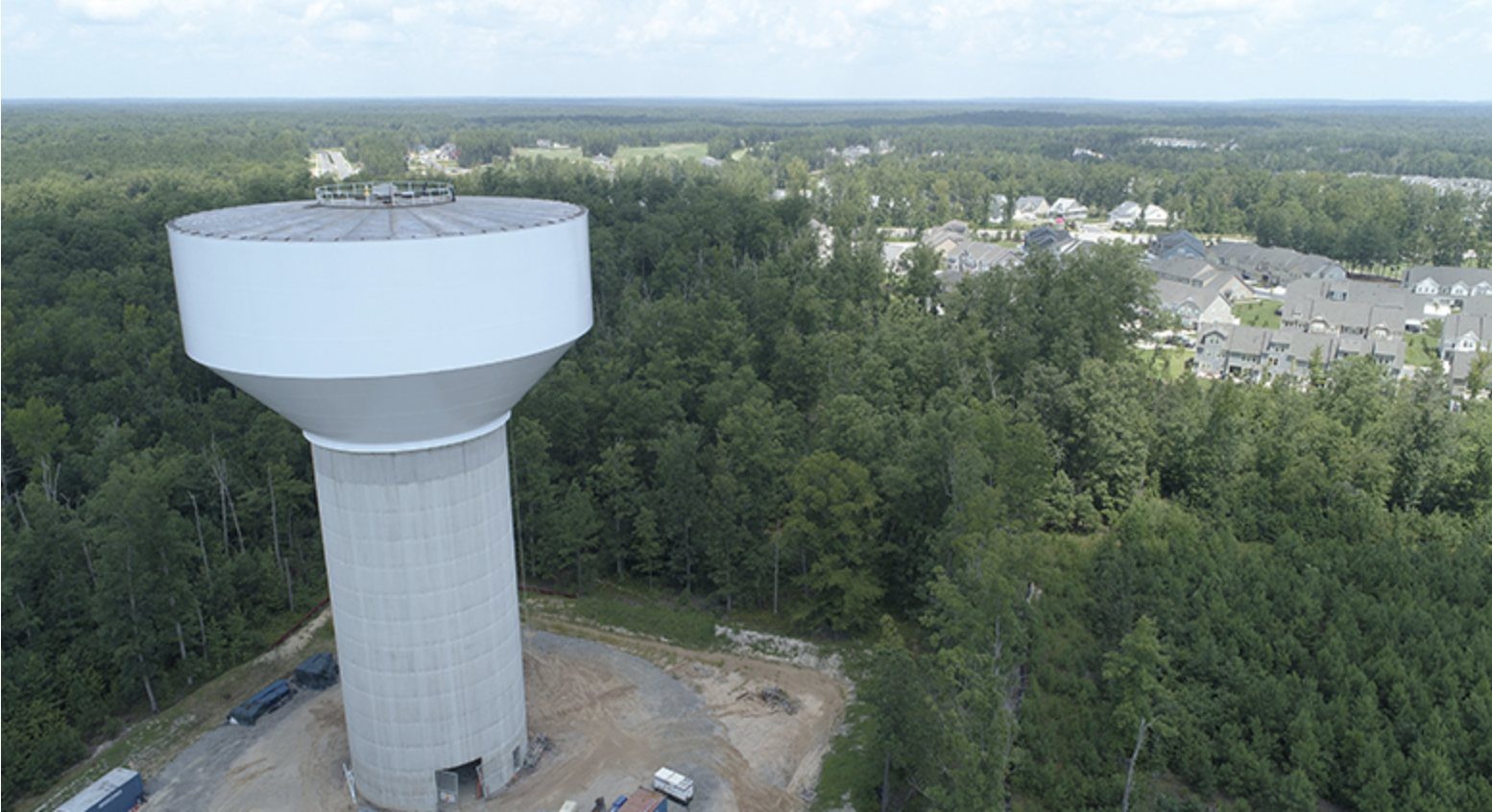
Municipal water and wastewater
Many of the elevated tanks serving Colorado communities went up around 1980. Measured coating and steel thickness lets you plan repaint and rehab years ahead instead of reacting to a failure. AMI collectors on those same structures get checked on the same trip.
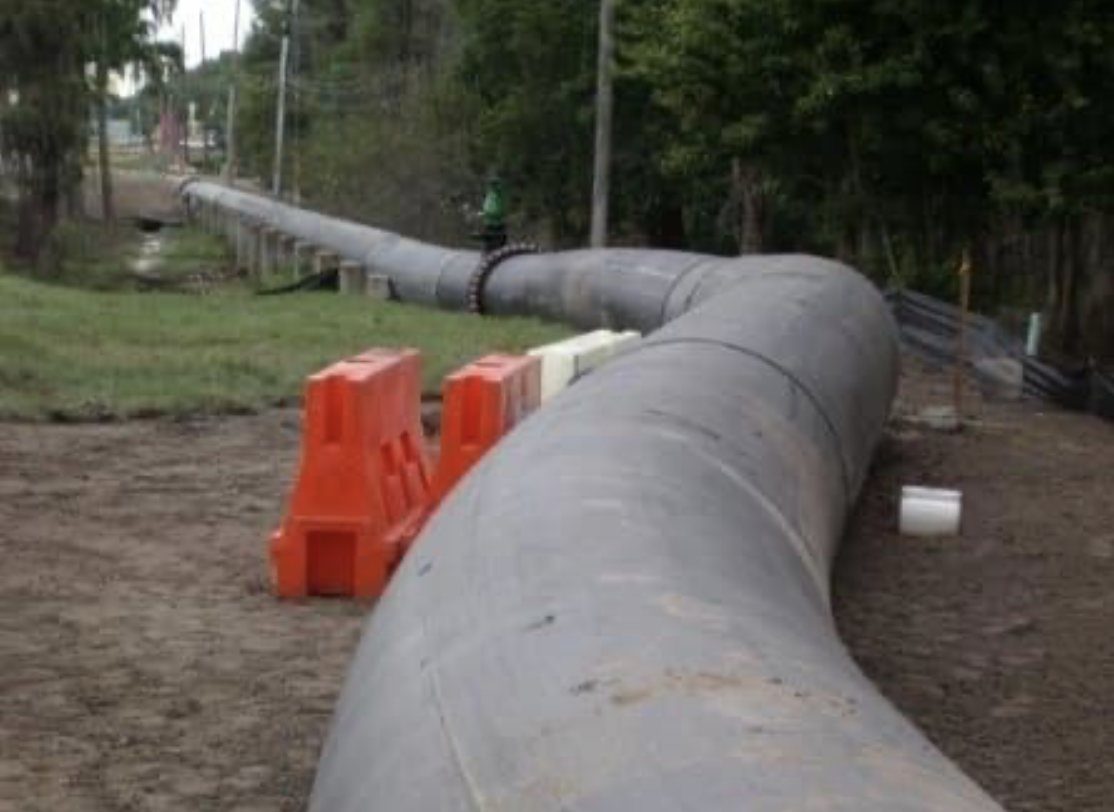
Oil and gas operators
Above-ground water transfer and produced water lines, in steel and HDPE, plus pipe racks and other above-ground runs. Long stretches get inspected without crews walking every foot, and you get condition data you can rank and act on.
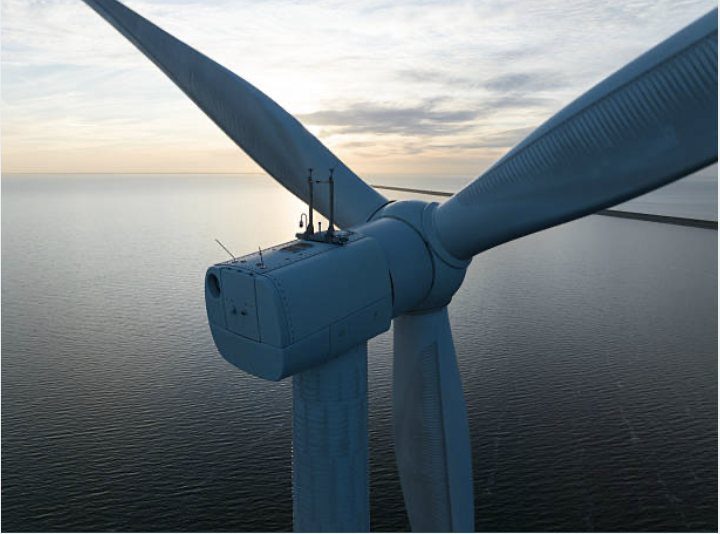
Wind energy
Lightning protection system testing on turbine blades, done by drone instead of rope teams. Faster turnaround per turbine means more of the fleet gets checked each season and less downtime waiting on access crews.
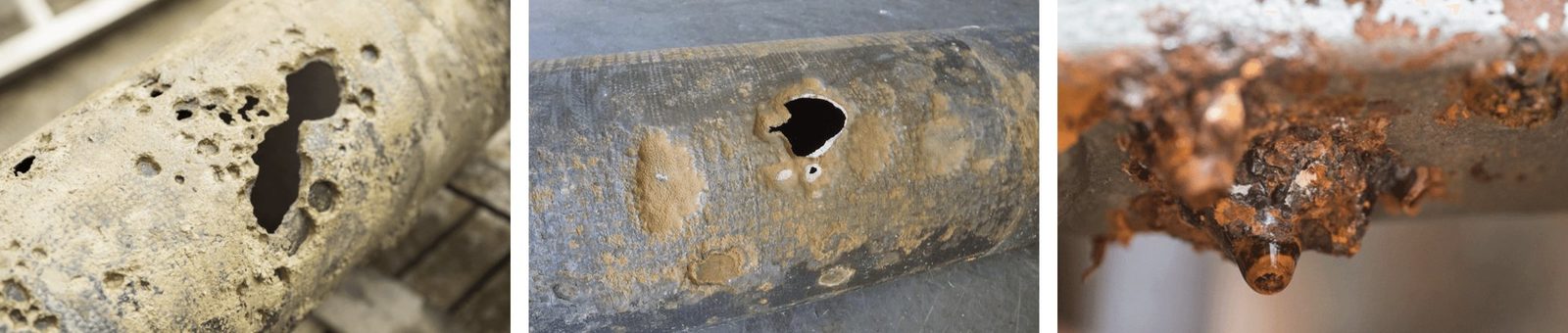
Corrosion does not wait for the budget cycle.
Pitting, coating breakdown, and through-wall loss build for years before anyone sees a leak. By then the fix is a replacement, not a repaint. Measuring early is how you stay on the cheaper side of that line.
What we inspect
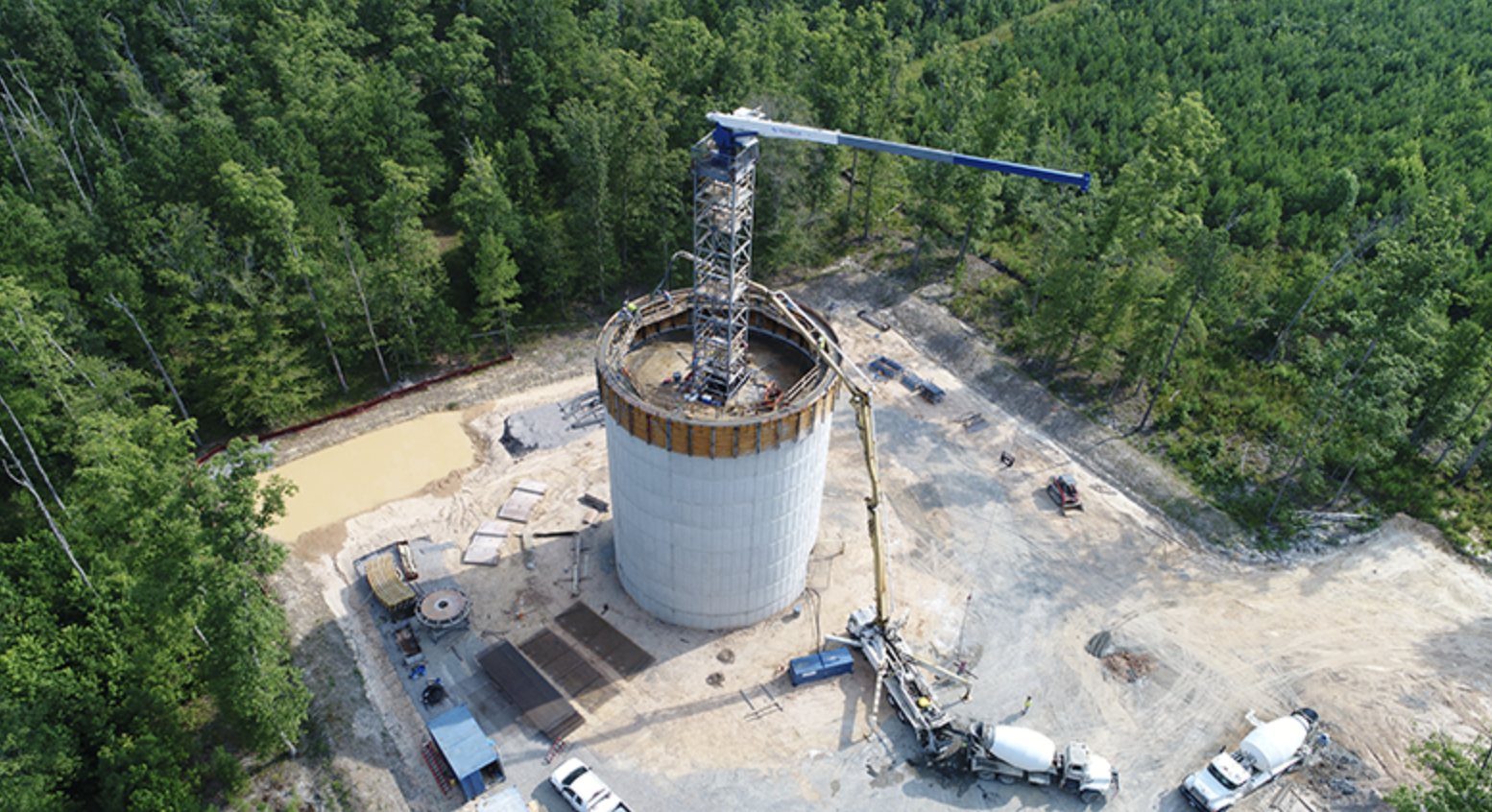
Steel tank coating and wall thickness
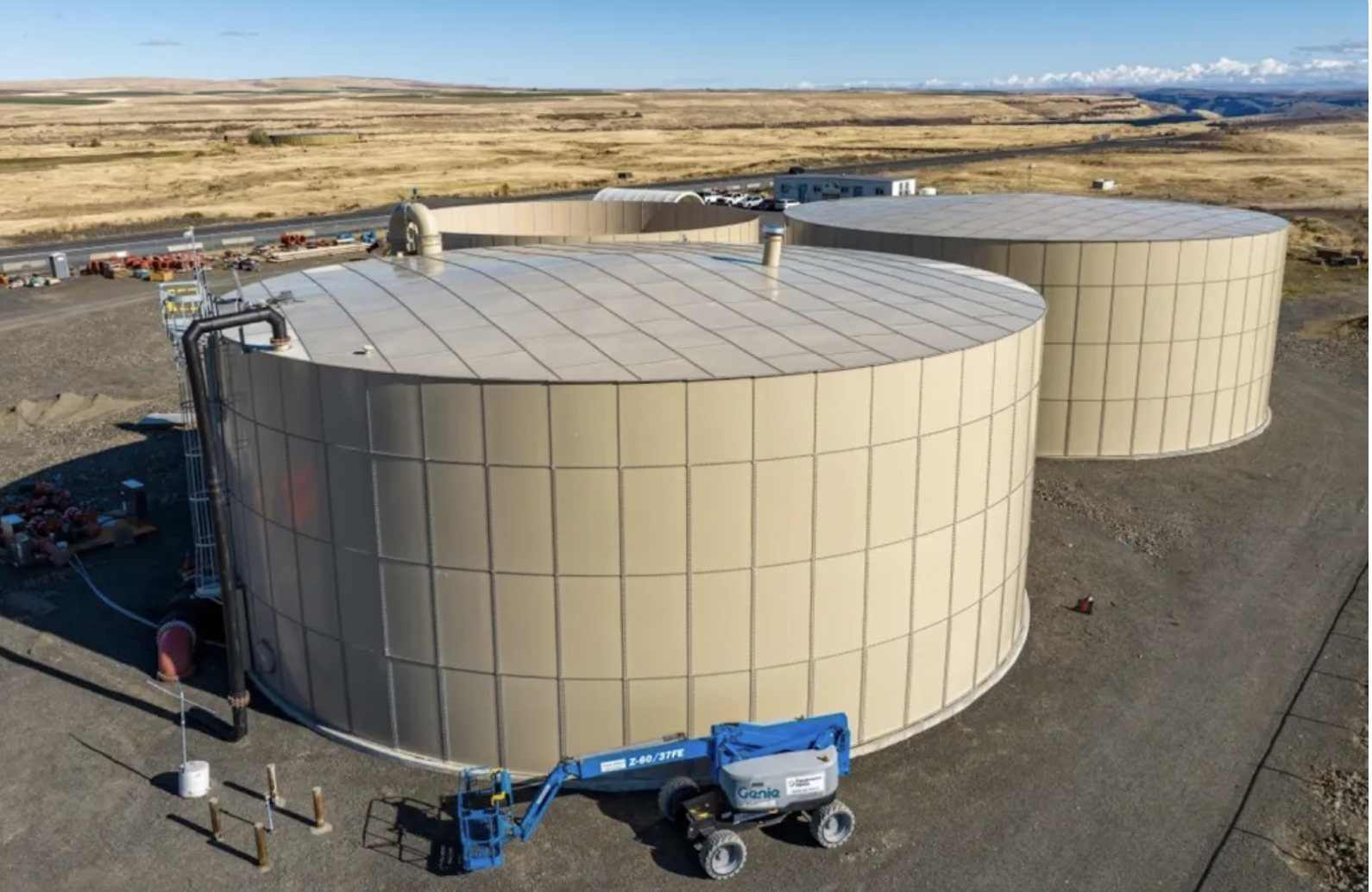
Dry film thickness on the coating and ultrasonic thickness on the steel, taken by a drone that makes contact with the structure. Covers elevated tanks from roof to riser, plus ground storage tanks and standpipes.
You receive a report with every reading tied to its location and flagged against your spec, ready for a capital plan or a repaint RFP.
Above-ground pipe, steel and HDPE
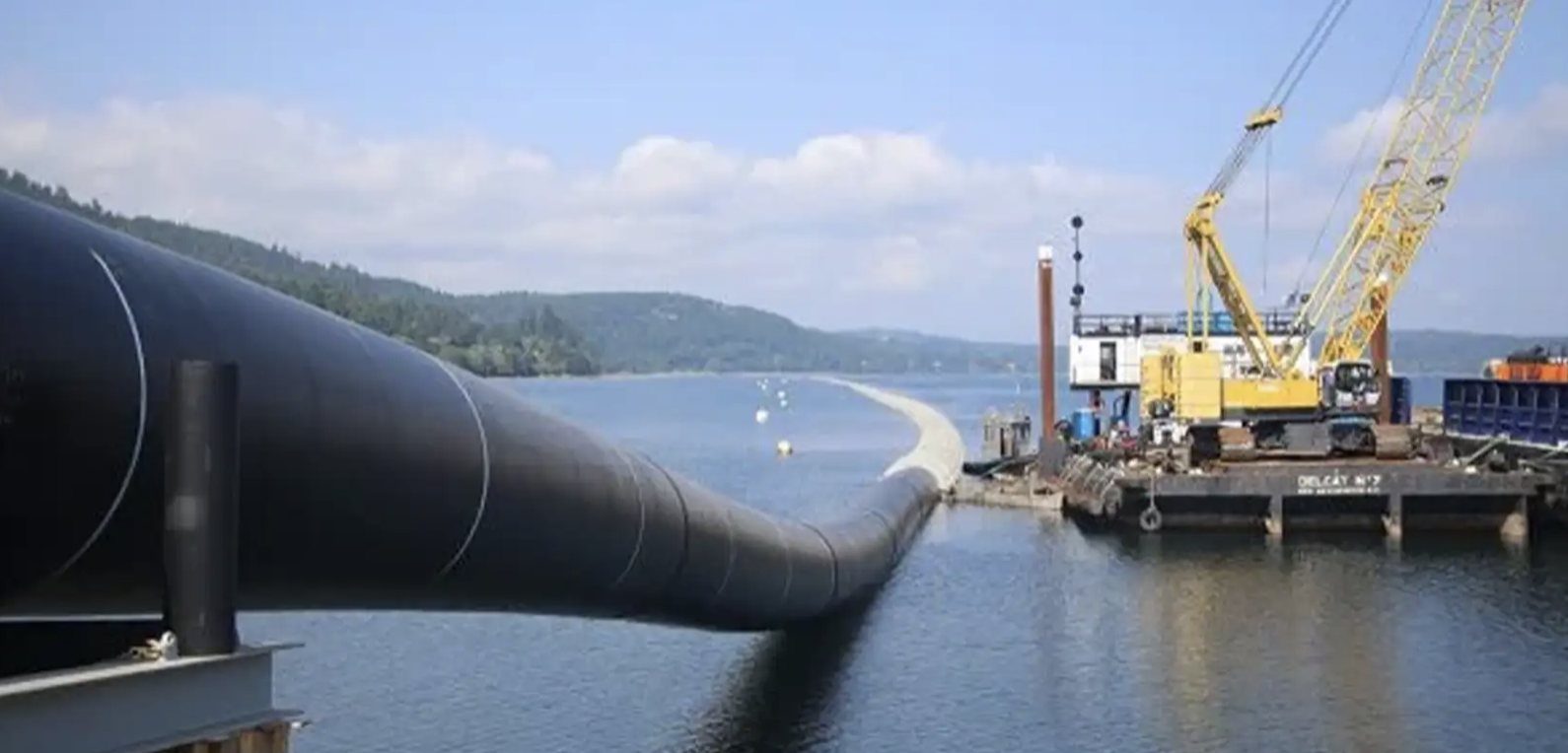
Water transfer lines, produced water lines, pipe racks, bridge crossings, and any other above-ground run. Steel pipe gets coating and wall thickness readings, and insulated lines can be screened for wall loss without stripping the jacket. HDPE gets close-range 4K visual inspection for cracking, deformation, and damaged joints or supports.
Results come back by location along the run, so crews go straight to the sections that need work. On live oil and gas sites, the drone can carry a flammable gas sensor that reports %LEL in real time.
Wind turbine lightning protection testing
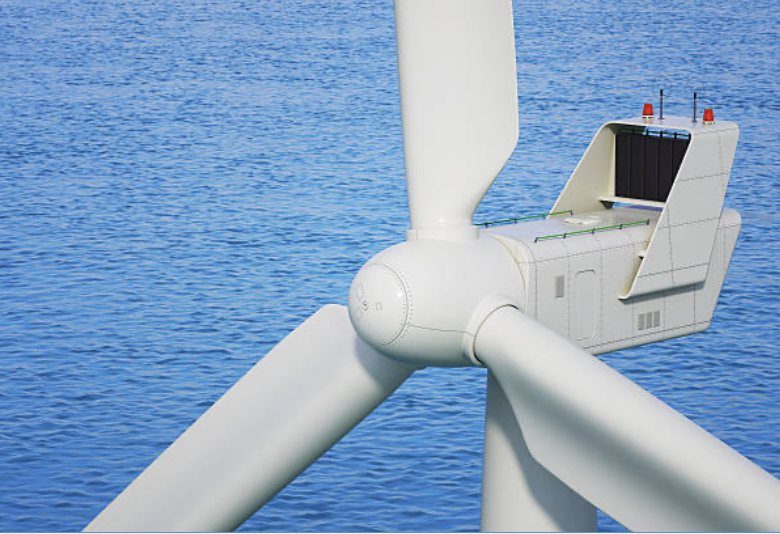
The drone touches each blade receptor and takes a full-circuit resistance measurement through the down conductor to ground, following IEC 61400-24. It works at any rotor position, often in a single stop per turbine, on towers up to 820 ft. This is the test that has traditionally needed rope access teams on every blade.
Each receptor gets a resistance reading, so you know which blades need attention before the next storm season.
Lightning protection systems on structures
Checking a lightning protection system usually means rope access, a lift, or a crew working at height just to confirm continuity, bonding, and condition. We use the Voliro T to put a test probe directly on the system instead, even on tall or awkward structures. Less time at height, a smaller mobilization, and a faster inspection.
- Direct-contact continuity and resistance testing
- Air terminals, down conductors, and bonding connections
- Probe placement on vertical, inverted, and complex surfaces
- High-resolution visual condition assessment
- Corrosion, damage, and missing component identification
- Rooftop and elevated infrastructure
- Reporting aligned with NFPA 780, IEC 62305, and CSA F417
AMI data collector inspections
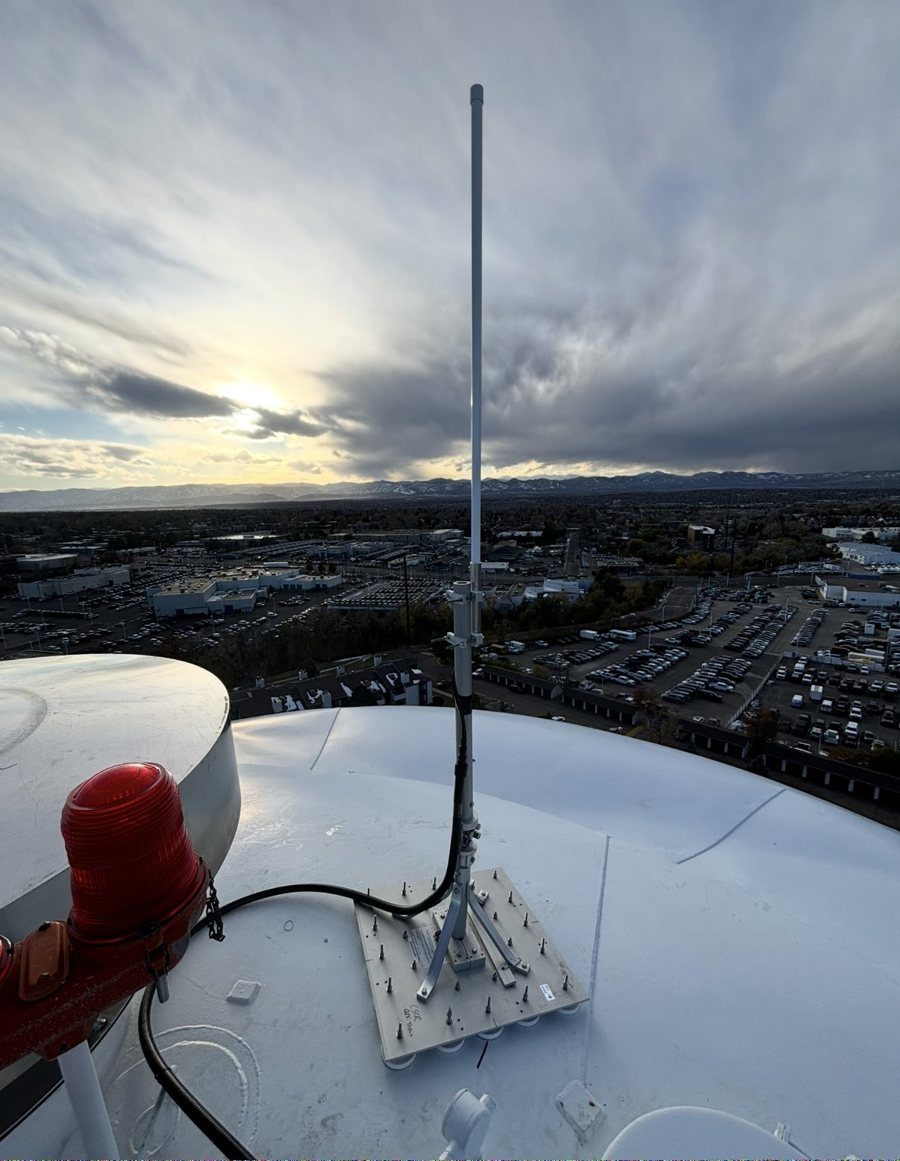
Collectors mounted on tanks, towers, and poles get a close visual check of the unit, antenna, mounting, and cabling without a bucket truck or a climber.
Built to run at least once a year, so problems on your AMI network get caught before reads start dropping.
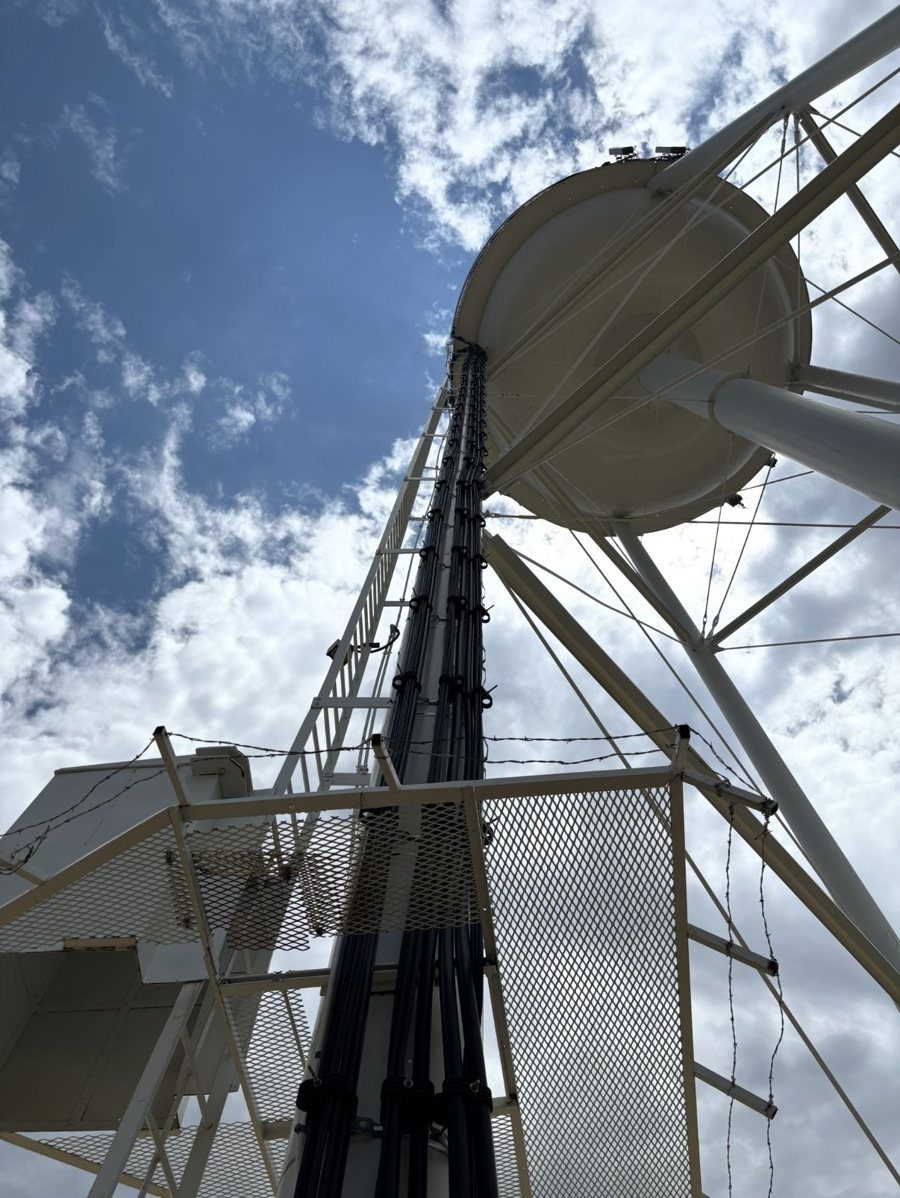
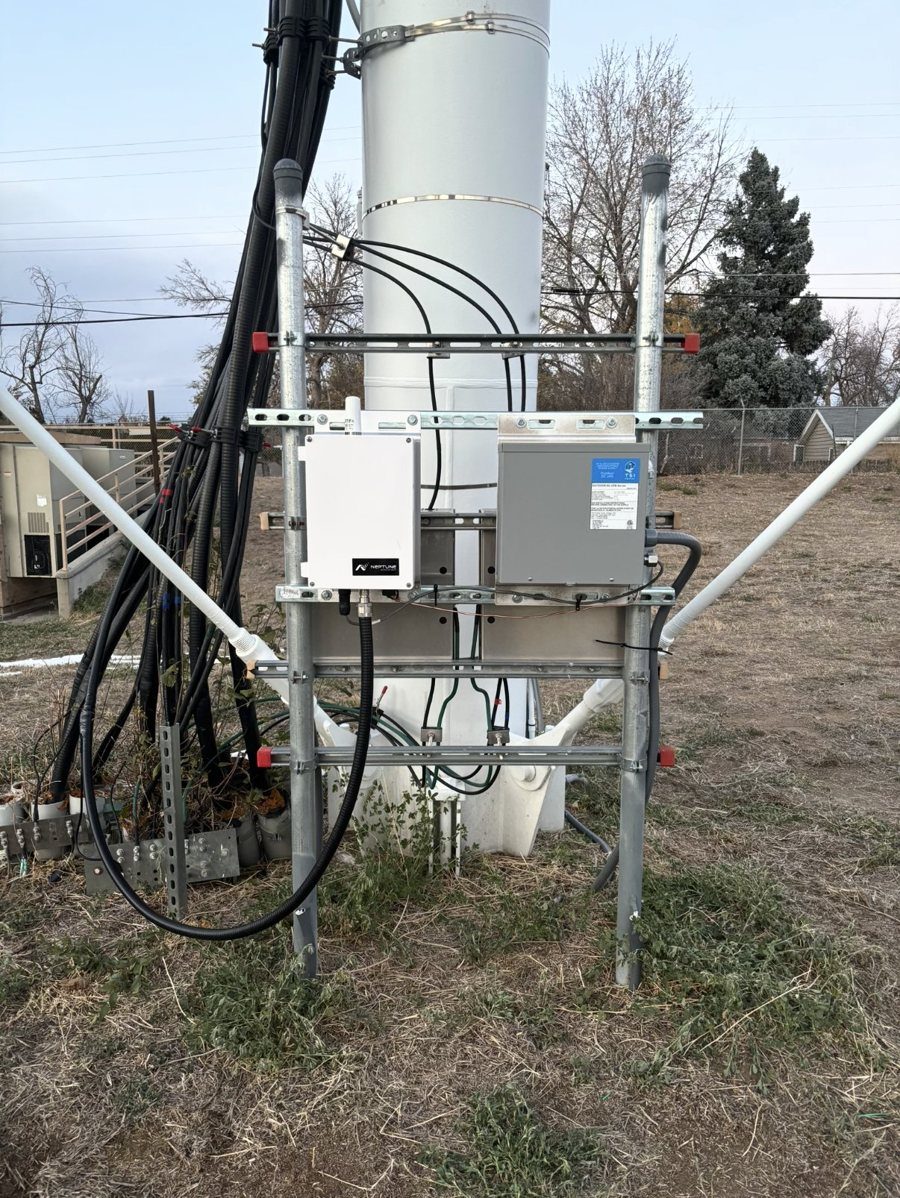
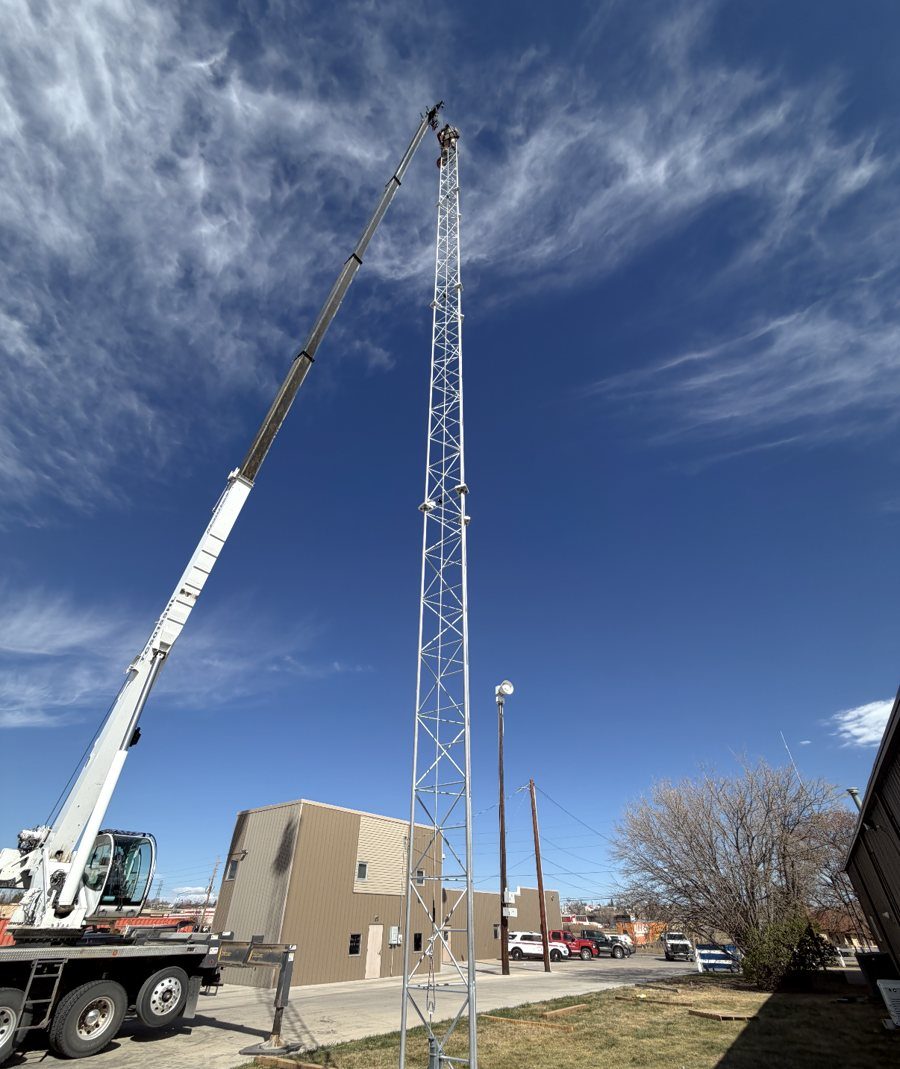
AMI installs we work with.
Lead screening
Coming soonWe are building a lead screening service for water utilities. Let us know you are interested and we will reach out when it launches.
Get notified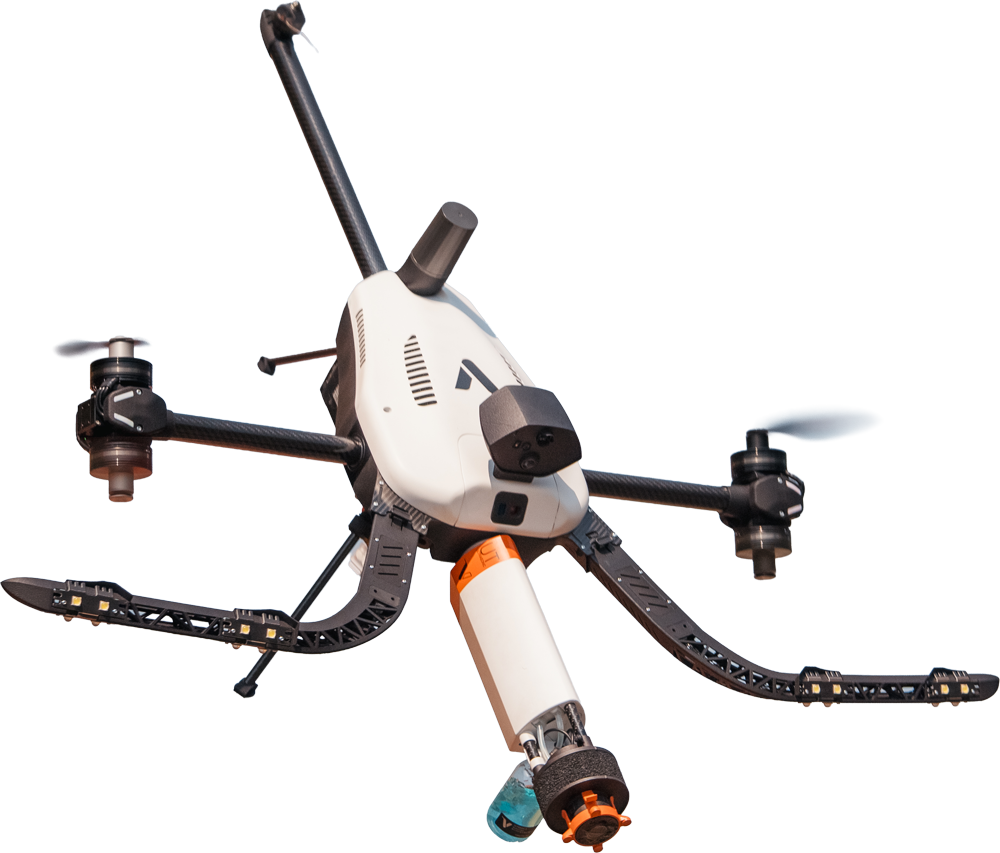
The drone that touches the steel
Most inspection drones only take pictures. The Voliro T is built to make contact, so it can take the same thickness and electrical readings an inspector would take by hand, without anyone leaving the ground.
Holds steady against the structure
Tilting rotors let it press a sensor flat against a wall, pipe, or tank bowl with up to 30 N of force and hold it there.
Works from any angle
Omnidirectional flight means it can test the underside of a bowl or a vertical riser as easily as a flat roof.
One drone, many sensors
UT, EMAT, coating thickness, pulsed eddy current, lightning protection, and gas monitoring payloads swap on site.
Sees what it touches
Two 4K cameras, one for the pilot and one for inspection, stream live to the ground crew.
Flies where GPS cannot
LiDAR and optical sensors navigate inside tanks and close to steel, with RTK GPS outdoors.
Built for Colorado
Rated to 16,400 ft above sea level and fits through a 20 in manhole for interior work.
What our drones measure
We fly the Voliro T, a contact inspection drone with tilting rotors that let it press a sensor flat against a wall, a pipe, or the underside of a tank bowl and hold it there. Sensors swap on site, so one visit can cover coating, wall thickness, and imaging.
| Measurement | What it tells you | Range | Typical assets |
|---|---|---|---|
| Ultrasonic wall thickness (UT) | Remaining steel wall at each point | 0.08 to 5.9 in, read to 0.002 in | Tanks, steel pipe |
| Electromagnetic acoustic wall thickness (EMAT) | Wall thickness through rust, scale, and dirty surfaces with no couplant and up to 0.16 in of lift-off | 0.08 to 5.9 in, read to 0.002 in | Corroded steel and iron pipe, tanks |
| Coating thickness (DFT) | Dry film thickness of the protective coating | 0 to 60 mils on steel | Tanks, steel pipe, towers |
| Pulsed eddy current (PEC) | Screening for wall loss under insulation, jackets, and corrosion scabs, through up to 4 in of lift-off | Steel walls 0.12 to 0.79 in | Insulated oil and gas lines, insulated tanks |
| Lightning protection resistance | Full-circuit resistance from receptor to ground, 4-wire method | 0.001 to 1,000 ohms, read to 0.01 milliohm | Wind turbine blades, up to 820 ft |
| Close-range 4K imaging | Visual condition with detail down to 0.16 mm per pixel | Live stream to the ground crew | HDPE pipe, AMI collectors, welds, supports |
| Flammable gas monitoring | Real-time %LEL readings and alerts around the drone | Live during the inspection | Active oil and gas sites |
Sensors comply with ASTM E1816, EN 12668-1, ISO 16831, ASTM D7091, and IEC 61400-24 as applicable. Flights run in dry weather between 14 and 104 °F, with contact work in winds under about 18 mph. We schedule around Colorado weather windows.
What drone testing finds on above-ground pipe
Pipe usually fails from the inside out or under something: scale, insulation, a support. Each failure mode has a test that catches it early, and one site visit can run several of them.
We have used EMAT to find severe internal wall loss on ductile iron pipe before it failed.
Internal corrosion and tuberculation
How we find itEMAT or UT wall thickness from the outside
What you getWall loss you cannot see, measured before it reaches a leak
External pitting and wall loss
How we find itEMAT, which reads through rust and scale without surface prep
What you getMinimum remaining wall at each tested point
Coating breakdown
How we find itDry film thickness (DFT)
What you getWhere the coating is thin and the steel is next
Corrosion under insulation
How we find itPulsed eddy current screening through the jacket
What you getSections flagged for follow-up, without stripping insulation
Damaged supports, joints, and HDPE runs
How we find itClose-range 4K imaging
What you getCracks, deformation, and failed supports documented by location
Every reading is tied to its location along the run and ranked by severity, so your crews go straight to the worst sections instead of walking the whole line.
Who leads the work
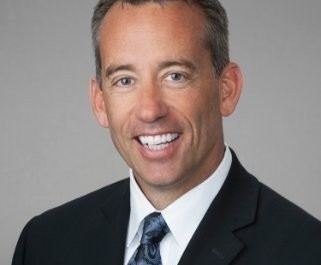
Andrew J. Dingee
Co-founder
Veteran Marine Corps fighter pilot
Andrew is a veteran Marine Corps fighter pilot who has spent more than three decades making high-risk operations safer and more predictable. He served 27 years in the Corps, flew the AV-8B Harrier as one of three East Coast airshow demonstration pilots, and retired as a Lieutenant Colonel after three combat tours. At United Airlines he managed safety and security for flight operations, and he still conducts quality assurance for Boeing 777 pilots there.
As Chief Standardization Officer and Vice President of HSE at bp, he built the oil and gas industry's first safety management system modeled on commercial aviation. His team ran 286 system investigations that produced more than 1,100 corrective actions, and a digital, quality-focused work program that cut HSE lagging metrics by up to 75 percent. He founded System Safety to help operators reduce human error and non-productive time.
That background shapes how we inspect: data collected the same way every time, and findings an owner can act on.
- Veteran fighter pilot, AV-8B Harrier, and Naval Air Training flight instructor of the year (1997)
- Lieutenant Colonel, U.S. Marine Corps, 27 years and 3 combat tours
- Former chairman of a military aircraft accident board
- Safety management system advisor, American Petroleum Institute Offshore Wind
- Former chairman, SPE Human Factors Committee
- NTSB Academy and USC trained safety investigator
- Author of Delivering the Right Stuff (2018)
Start with one pilot at a discounted rate.
One tank, one pipe run, or one turbine, inspected in full and priced so you can see the data before committing to more. Ask us about pilot pricing.
- 1Pick the asset. The one that worries you most, or the one that is next in the budget.
- 2We fly and measure. One site visit, scheduled around your operations. No scaffolding, no rope crew.
- 3You get the report. Readings mapped to the structure, in a written report.
- 4We walk through it together. What the numbers say, what can wait, and what belongs in the next capital or maintenance cycle.